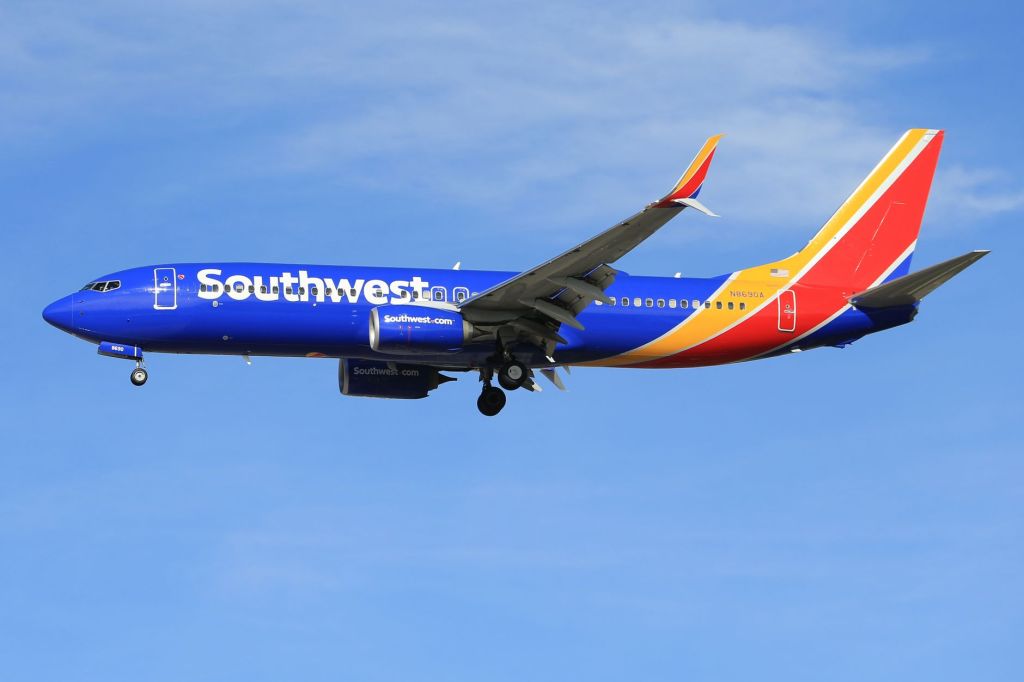
If there’s one travel perk that consistently over-delivers for families, it’s the Southwest Companion Pass. Not because it’s glamorous — Southwest is decidedly not a luxury airline — but because of what it actually does for the math of family travel: it lets one person fly free on every Southwest flight you take, for up to two full years.
For a family of four, with the right strategy, that means buying 2 tickets and flying 4 people. Every time. For two years.
This post covers everything: what the pass actually is, the fastest way to earn it, the timing trick that gets you nearly two full years of use, and the family-specific strategy most blogs never mention.
What the Companion Pass actually is
The Southwest Companion Pass allows you to designate one person as your companion. Every time you fly Southwest — whether you pay with cash or points — your companion flies with you for just the taxes and fees. Domestically, that’s $5.60 each way. On international routes (Mexico, Caribbean), it runs roughly $50–$75 each way.
There’s no limit on how many times you can use it. No blackout dates. No “saver” award space required. If there’s a seat available on the plane, your companion can be on it.
A few other key details:
- You can change your designated companion up to 3 times per calendar year — so if your pass is valid for 2026 and 2027, you can technically designate up to 8 different people across those two years
- The pass works on both paid tickets and award tickets — so you can use Southwest Rapid Rewards points for your own flight and still bring your companion for taxes and fees only
- With Southwest’s 2026 introduction of assigned seating, you can now select seats together when you add your companion — a meaningful upgrade for families
What you need to earn it
You need to accumulate 135,000 Companion Pass Qualifying Points (CPQP) in a single calendar year. The clock resets January 1 every year — points don’t carry over.
The following count toward the 135,000:
- Base points earned from Southwest flights
- Points earned from Southwest credit card spending
- Welcome bonuses from Southwest credit cards
- The 10,000-point annual Companion Pass boost (one per Rapid Rewards member, not per card)
- Referral bonuses from referring others to Southwest cards
- Points from Rapid Rewards shopping, dining, and hotel partners
Crucially, Chase Ultimate Rewards points transferred to Southwest do NOT count toward the Companion Pass. Only points earned directly within the Southwest ecosystem qualify.
The fastest path: the two-card strategy
Earning 135,000 points through flying alone would require extraordinary volume. Most people who earn the Companion Pass do it with credit card welcome bonuses — and for good reason. Two well-timed card applications can get you there with minimal extra spending.
The two cards to open
Southwest Rapid Rewards Performance Business Credit Card (Chase)
- Current welcome offer: approximately 80,000 bonus points after $5,000 in purchases in the first 3 months
- Annual fee: $199
- Business card — applies to sole proprietors, freelancers, gig workers, and anyone with any side income (see our business card eligibility guide →)
Southwest Rapid Rewards Priority Credit Card (personal)
- Current welcome offer: approximately 50,000–60,000 bonus points after $1,000–$2,000 in purchases in the first 3 months
- Annual fee: $149
The math
| Source | Points |
|---|---|
| Performance Business welcome bonus | ~80,000 |
| Priority personal welcome bonus | ~50,000–60,000 |
| Annual 10,000 CPQP boost | 10,000 |
| Total | ~140,000–150,000 |
That’s 135,000+ from card welcome bonuses and the annual boost alone — often with as little as $6,000–$7,000 in combined minimum spend across both cards.
Important eligibility notes
- 5/24 applies. Both cards are issued by Chase. If you’ve opened 5 or more credit cards from any bank in the past 24 months, Chase will likely deny you. The business card generally does not count toward your 5/24, but the personal card does.
- Personal Southwest bonuses are once every 24 months. You can re-earn the welcome bonus on the same personal Southwest card 24 months after your previous bonus posted — not 24 months from card opening.
- Business and personal bonuses don’t interfere with each other. Earning the Performance Business bonus doesn’t block you from the Priority personal bonus, and vice versa.
- You can only hold one personal Sapphire card and one Southwest personal card at a time — plan accordingly if you’re balancing a Chase Sapphire strategy alongside this.
The timing trick that almost doubles your value
This is the most important detail in the entire strategy, and the one most people get wrong.
The Companion Pass is valid for the rest of the calendar year you earn it, plus the entire following calendar year. That means:
- Earn it January 2026 → valid through December 31, 2027 (nearly 2 full years)
- Earn it December 2026 → valid through December 31, 2027 (barely 1 year)
The difference between earning it in January versus December is roughly a full year of value.
How to execute the timing
- Apply for the Performance Business card in October or November
- Apply for the personal card about 30 days later
- Do NOT complete your minimum spending requirement by December 31 — leave roughly $500–$1,000 of spend on each card to finish in January
- Make your final charges in early January so both bonuses post after the calendar year resets
- Both bonuses post in January → you hit 135,000 CPQP → Companion Pass activates immediately → valid through December 31 of NEXT year
If you time this perfectly, you get the Companion Pass for January 2026 through December 2027 — 23+ months of use from a single two-card strategy.
The family of four strategy — the move most blogs skip
Here’s the part that makes the Companion Pass genuinely extraordinary for families: both parents can each earn their own Companion Pass independently.
Each person’s Rapid Rewards account is separate. Each person’s 135,000 CPQP threshold is tracked independently. That means:
Parent 1 earns the Companion Pass → designates Parent 2 as companion → Parent 2 flies free
Parent 2 earns the Companion Pass → designates one of the kids as companion → that kid flies free
For a family of four (2 parents + 2 kids):
- Parent 1 buys their own ticket → Parent 2 flies free (Companion Pass)
- Parent 2 buys their own ticket → Kid 1 flies free (Companion Pass)
- Kid 2 buys a ticket normally at Southwest’s standard rate
Result: a family of 4 is buying 3 tickets instead of 4, on every single Southwest flight, for up to 2 years.
If you add up a typical family’s Southwest flights over 2 years — a few weekend trips, maybe a longer vacation, holiday travel — the savings compound dramatically. A round-trip Southwest ticket averages $200–$400 per person. Getting one person free per parent per trip, on every trip, for two years, can easily save a family $2,000–$5,000+.
How to coordinate the two-pass strategy
- Both parents run the same two-card strategy (Performance Business + Priority personal) independently
- Apply in the same October/November window so both bonuses post in the same January — ensuring both passes are active simultaneously
- Each parent designates who they want as their companion at the start (can be changed up to 3x per calendar year if needed)
- Coordinate designations: one parent designates the other adult, one parent designates a child — or adjust based on who’s traveling on any given trip
One practical note on companion designation and kids
With Southwest’s 2026 assigned seating rollout, it now matters slightly more when you add your companion to a reservation. If your companion is a child, add them as soon as you book your ticket so you can select seats together. If your companion is another adult and sitting together isn’t critical, you can add them closer to the flight.
What the pass doesn’t include
- No A-List or A-List Preferred status. The Companion Pass and Southwest elite status are earned separately. Points from card spending count toward the pass but not toward status.
- No companion upgrades — if you’re in a Business Select fare, your companion isn’t automatically upgraded, though they can purchase it
- International taxes and fees are higher — the $5.60 figure applies to domestic flights. International flights run $50–$75 per companion each way, which is still a significant discount but not “basically free”
How to check current card offers
Southwest card offers fluctuate significantly. The 80,000-point offer on the Performance Business card and 50,000–60,000-point offer on personal cards are common but not guaranteed — elevated offers have historically appeared a few times per year.
Check our Current Best Offers page → for the live numbers before applying — the difference between a 50,000-point offer and a 60,000-point offer could be the difference between needing extra spend to hit 135,000 or coasting across the threshold with your welcome bonuses alone.
Is the Companion Pass right for your family?
The Companion Pass is a phenomenal deal specifically if:
- Your family regularly flies domestically — the pass is most powerful on routes Southwest actually flies
- You live near a Southwest hub — major Southwest cities include Dallas (Love Field), Denver, Las Vegas, Chicago (Midway), Baltimore, and Atlanta (though recently reduced)
- You’re under 5/24 and eligible for at least one personal Southwest card
- You can time the applications correctly for maximum validity
- You have a partner/spouse who can run the same strategy independently for the two-pass family approach
It’s less ideal if: your family primarily flies international routes on major alliances, you’re over 5/24 on both parents’ accounts, or you live in a city with poor Southwest coverage.
The bottom line
The Southwest Companion Pass isn’t glamorous. But for domestic family travel, it’s one of the most straightforward, high-value, repeatable travel hacks available — especially when both parents execute the strategy simultaneously.
Two cards. Right timing. Two passes. A family of four buying two tickets and flying four people.
Check current Southwest card offers on our Current Best Offers page → and see our business card eligibility guide → if you’re not sure whether you qualify for the business card side of the strategy.


Leave a comment